RheumaView · Announcement · Pilot
Five Quiet Minutes: A Daily Memory Trainer, Now in Pilot
There is a new page on this site, and it is not an article. It is a small daily ritual: a memory trainer that takes about five minutes, changes every morning, and speaks twelve languages. As of this week it is open to everyone, in pilot.
What it is
Each day the trainer offers three short exercises, drawn from a pool of six: recalling words, repeating digit strings forward or in reverse, remembering which cells lit up on a grid, spotting which symbol went missing, and matching pairs of cards. The daily set is generated from the calendar date itself, which has a consequence I like: everyone who plays on July 10 plays the same July 10 set, wherever they are. The next morning brings a new one, numbered in sequence — the counter started on January 1, 2026, and every set divisible by 25 arrives dressed as a «golden set,» with a slightly warmer glow to the frame.
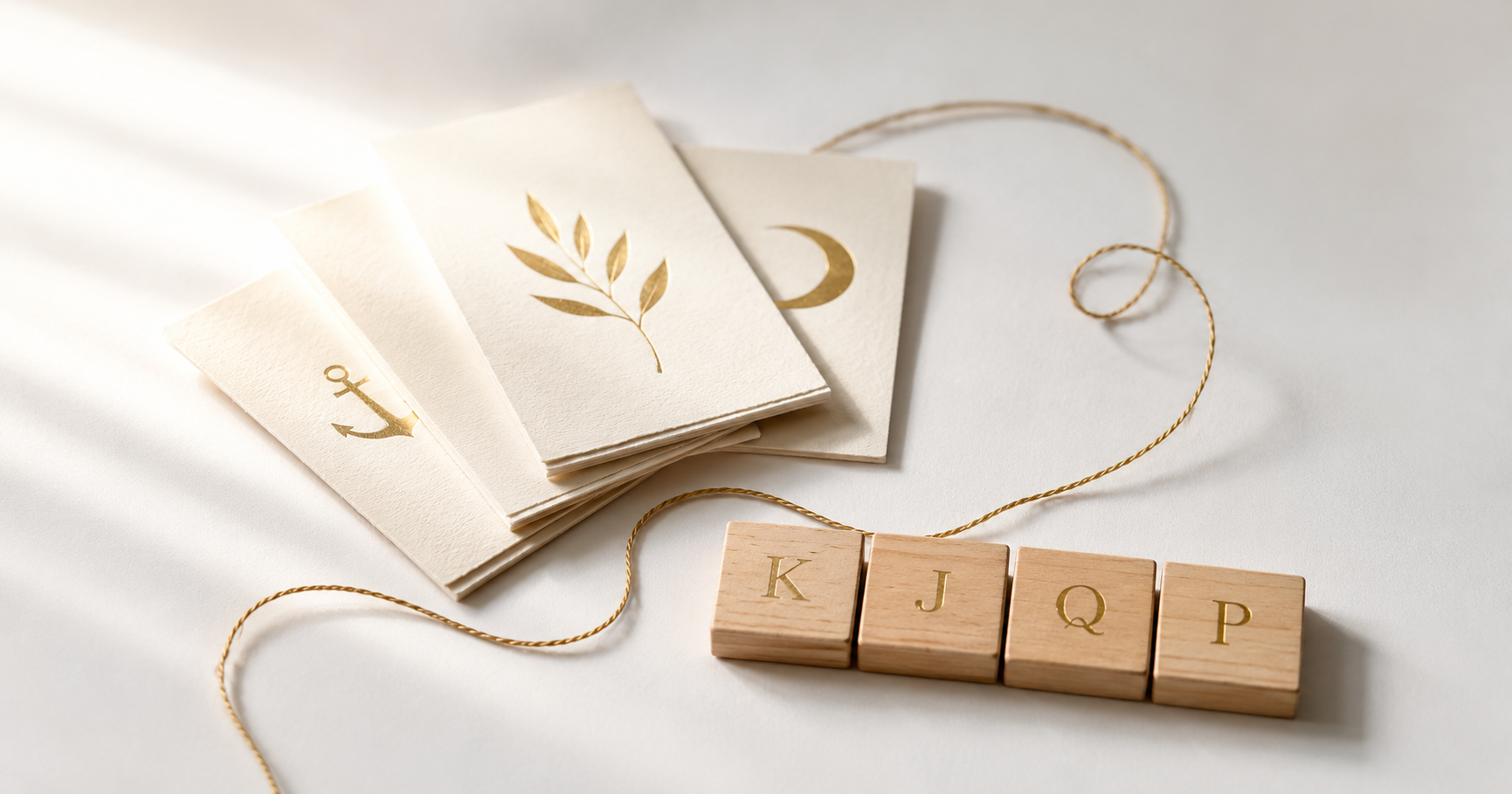
The card decks rotate too. There are seven of them — a classic set, chess and card suits, sky and weather, plain geometry, an alchemist’s cabinet, typographic marks, and the zodiac — and within any seven-day window each deck appears exactly once, in an order that reshuffles weekly. Repeat today’s session and the cards land in new positions, so there is no memorizing your way around the exercise; the material stays, the layout does not.
Difficulty adjusts on its own. Score high for a stretch and the trainer quietly asks for six words instead of five, seven digits instead of six. Struggle, and it eases back. There are three levels, the transitions are silent, and nothing announces that you have been demoted. That silence is deliberate.
Two decisions I would defend
The first is privacy, taken further than the genre usually bothers to. The entire trainer runs inside your browser. There is no account, no sign-up, no analytics beacon, and no server that ever sees a score. If you want a 30-day trend chart — daily bars, your average, your personal best, a weekly comparison — you tick a box, and that history lives in your own browser’s storage on your own device. Untick it, or press the clear button, and it is gone. The page states this in plain words in every language it supports, because a promise about data that hides in a policy document is a weak promise.
The second is tone. Commercial brain-training apps lean on leaderboards, streak-shaming, and red X marks, and I wanted none of it. Here, a poor round earns «a tricky one» rather than a verdict. A strong one earns a short word of praise and, past 85 points, a few gold sparks around the score ring. Milestones exist — a quiet mark at seven, fourteen, and thirty consecutive days, a small case of six medallions to collect — but no notification will ever chase you. The set simply waits, and at midnight it is replaced. The trainer will greet you by name if you offer one, play a soft two-note chime if you switch the sound on, and dress itself in one of five color themes, including a light one for tired eyes.
Why a rheumatologist built this
A fair question. A large part of my clinical week involves people who worry about their recall — brain fog with autoimmune disease, the cognitive weather of chronic inflammation, medication effects, and the ordinary arithmetic of aging. What I can offer in the exam room is assessment and honesty. What I kept wishing I could also offer was something small, kind, and daily; the equivalent of a morning walk for a function everyone quietly monitors in themselves.
The page carries that sentence in all twelve languages — English, Spanish, French, Russian, Portuguese, Italian, German, Chinese, Japanese, Korean, Ukrainian, and Polish — because a disclaimer the reader cannot read protects nobody.
What «pilot» means here
It means the trainer is finished enough to use and unfinished enough to change. I have opinions about what to build next — a calendar reminder already exists on the results screen, and a shareable score card that deliberately reveals nothing about the day’s answers — but the honest ranking of future work should come from the people playing, and I would rather hear it early.
So the comment section under the trainer is open, and it is open on purpose. Tell me which exercise feels too easy or too opaque, which language reads awkwardly, what a physician’s waiting room would need from a tool like this, and what to remove. Criticism is more useful to me right now than praise, and considerably more useful than silence.
Today’s set is already waiting; tomorrow’s is already decided.